

Jersey vs. Interlock vs. Rib: Choosing Baby Apparel Blanks
In this guide
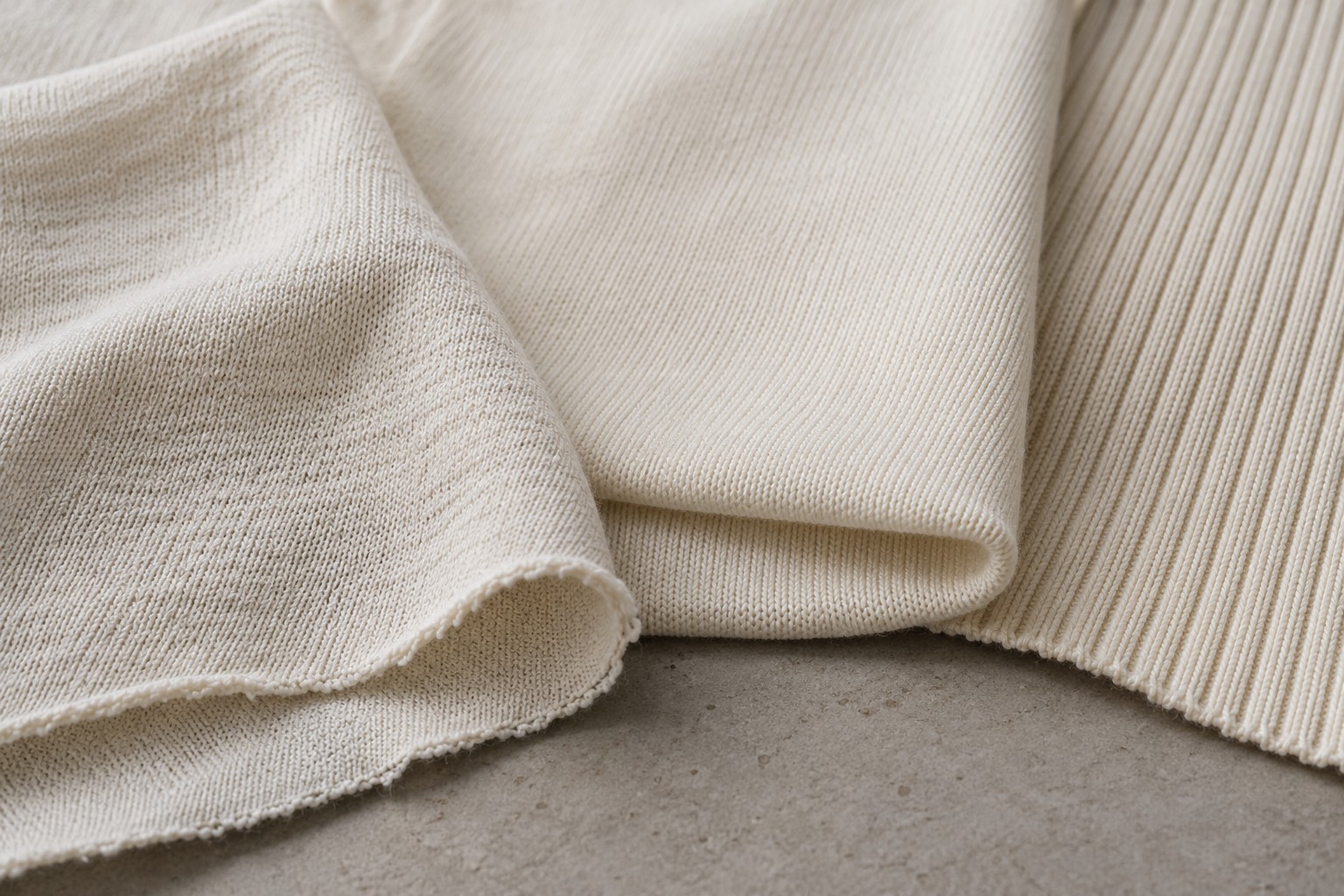
Jersey, interlock, and rib describe knit structures, not fiber content or quality grades. Jersey commonly provides a smooth face for everyday tees; interlock offers a smooth double-knit construction; rib has visible vertical columns and pronounced crosswise stretch. For baby apparel, choose by the actual garment's feel, fit, weight, and decoration requirements rather than the fabric name alone.
Separate fiber, structure, and weight
A garment can be cotton and jersey, cotton and interlock, or cotton and rib. “Cotton” identifies a fiber; the other terms describe how yarn forms the fabric. Fabric weight adds another variable. A heavier jersey and a lighter interlock may not behave the way their names lead you to expect.
CottonWorks' explanation of single and double knits provides background on these structures. For a purchase decision, inspect the finished blank as well as the specification: yarn, stitch density, finishing, and garment construction all influence the result.
Compare the three knit structures
| Knit | Useful identifying feature | Decoration question |
|---|---|---|
| Jersey | Smooth technical face with a different-looking reverse | Does the fabric support the design without distortion? |
| Interlock | Smooth double-knit surface on both sides | Does the actual weight suit the print or stitch coverage? |
| Rib | Alternating vertical knit and purl columns | Will the decoration move with the fabric's stretch? |
The table is a starting point, not a ranking. Neither a smooth surface nor a thicker hand proves that a garment will hold a particular embroidery design. Test the intended blank, size, and color with your own process.
Match the fabric to how the garment is used
For a simple printed baby tee, a smooth chest area may be the main priority. For a garment with close-fitting sections, stretch and recovery may matter more. Neck openings, shoulder construction, and snaps also affect everyday use; a preferred fabric cannot compensate for an unsuitable garment shape.
Browse MONAG baby apparel with those requirements in mind. When considering organic apparel, still check the knit structure, composition, and style details. The word “organic” does not describe the garment's stretch or automatically establish decoration compatibility.
Test printing and embroidery differently
For printing, examine coverage on the surface, the feel of the design, and its appearance when the garment moves. Stretch the finished sample only as it would reasonably stretch in use; look for unexpected distortion or separation. Follow the print or transfer manufacturer's guidance for the specific fabric.
For embroidery, evaluate design density, stabilizer choice, and the reverse side as well as the visible stitches. A dense design can change how a small garment drapes. Our baby bodysuit decoration guide expands on those choices.
Keep a simple comparison record
- Record the exact style, size, color, fiber content, and listed fabric weight.
- Measure before decorating and after the intended care test.
- Photograph the front, reverse, and decorated area under consistent light.
- Note softness, opacity, stretch, and closure access in the finished item.
- Keep the best-performing sample as the reference for future batches.
Frequently asked questions
Is interlock always thicker than jersey?
No. Construction alone does not establish the weight of two finished garments. Compare the stated weight and physical samples rather than treating the knit name as a thickness guarantee.
Can rib knit be printed?
It can, with a process suited to the actual fabric and its stretch. The surface and movement deserve testing; approval on a smooth tee does not automatically transfer to rib.
Which knit is best for baby clothing?
There is no single best choice. Select the garment that fits its intended use and passes your fit, decoration, and care checks. See our broader fabric guide for additional terms.

