

How to Build a Personalized Baby Gift Set with Blank Apparel
In this guide
A personalized baby gift set works best when the pieces are useful on their own and easy to care for together. Start with a blank bodysuit, add a practical accessory such as a bib or cap, and repeat one small design element across the set. Choose sizes deliberately, test the decoration, and package the finished pieces with clear care information.
Choose the main garment first
Let the bodysuit or T-shirt determine the set's size, color palette, and decoration method. Browse baby apparel blanks, then check the individual product's fabric, closure, and size information. A name that fits an adult shirt may be too wide for an infant garment, particularly near overlapping shoulders or snaps.
Build around a specific use: a welcome gift, a sibling announcement, or a small boutique collection. Keeping that purpose clear makes it easier to leave out decorative extras that increase cost without making the set more useful.
Build a coordinated three-piece bundle
| Piece | Role in the set | What to check |
|---|---|---|
| Bodysuit or baby tee | Main personalized item | Size, front decoration area, and closure access |
| Bib | Useful coordinating accessory | Absorbency, backing, and space away from binding |
| Cap | Optional finishing piece | Size, stretch, and whether decoration changes the fit |
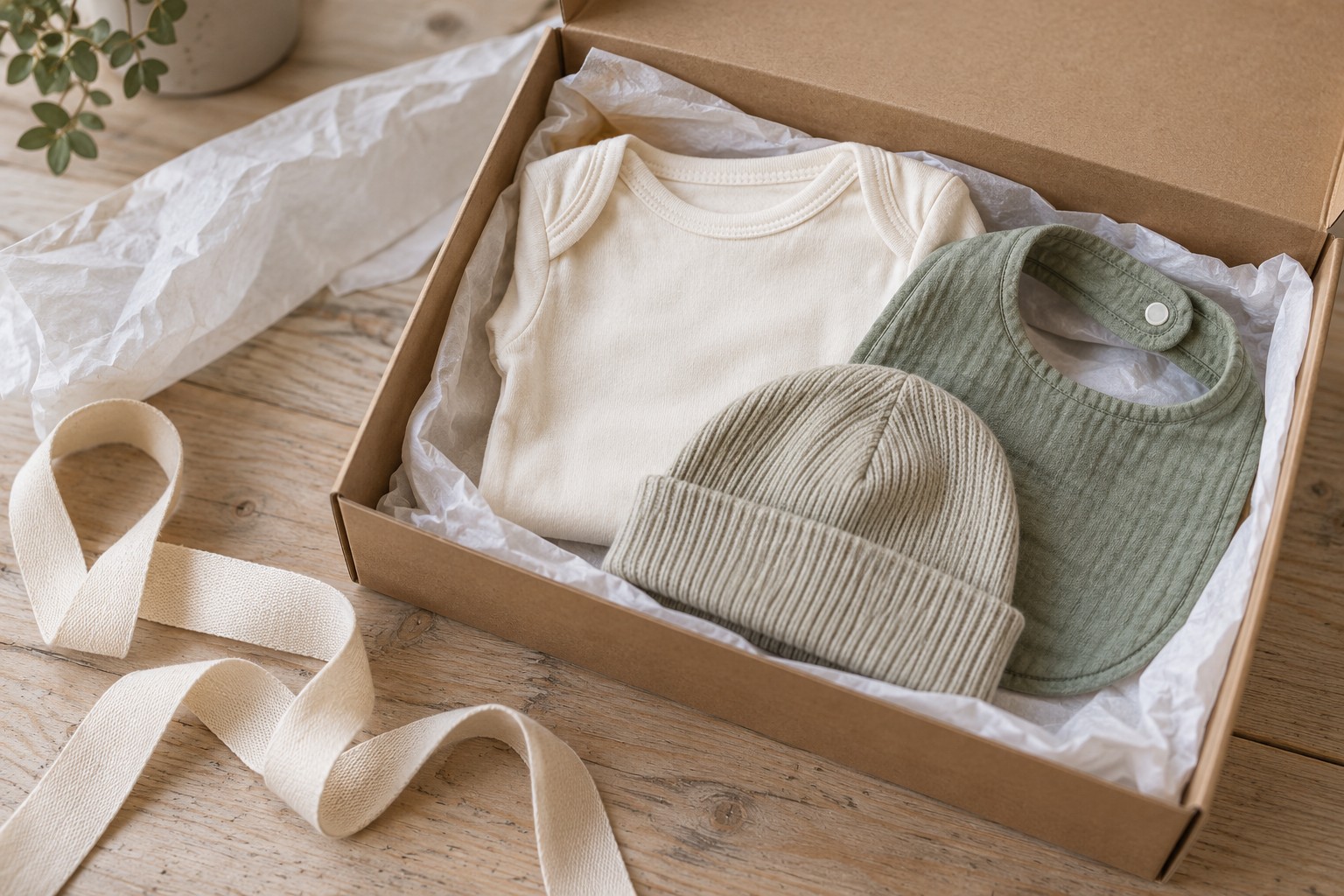
Coordinated does not have to mean identical. An ivory garment, muted green bib, and neutral cap can feel cohesive through a shared thread color. Compare physical samples before promising an exact match: fabric structure and lighting can make the same named color look different.
Make the sizing decision explicit
Ask whether the gift is intended for immediate use or a later stage. Use the selected garment's size chart instead of assuming an age label guarantees a fit. If the recipient's size is unknown, make the size visible in the product description and explain any exchange restrictions before customization begins.
For a mixed-size bundle, identify each piece separately. “Bodysuit: 6–12 months” is more useful than calling every item in the box a 6–12 month set when the accessories use different sizing systems.
Test personalization before making multiples
- Confirm the exact spelling, capitalization, and artwork with the buyer.
- Make one finished sample using the intended blank, thread or transfer, and equipment.
- Check the inside surface, seams, closures, and garment stretch.
- Wash and dry the sample according to instructions compatible with both garment and decoration.
- Photograph the approved result and keep its production notes.
Our baby bodysuit decoration guide explains how to compare printing and embroidery. For the accessory, see the blank bib selection guide.
Price and pack the complete set
Include blanks, decoration materials, labor, packaging, and a realistic allowance for remakes in your costing. A low-cost box can still take substantial assembly time. Fold items so the personalization is visible, keep ribbons and packaging separate from the garments, and include garment-specific care information. Describe the contents precisely rather than implying that unrelated display props are included.
Frequently asked questions
Should every piece have the baby's name?
No. One personalized garment and two coordinating plain accessories can make a more flexible set. Repeating a small motif is another option when long names would crowd the available space.
Can organic cotton blanks be used?
Yes, if the selected product suits the design and care requirements. Browse MONAG's organic apparel selection and verify the individual item's composition and product claims before describing the finished gift.
What should the care card say?
Use instructions supported by the garment and decoration process you actually tested. Avoid a generic card that contradicts the garment label or omits a transfer supplier's first-wash waiting period.

