

Baby Rompers for Printing and Embroidery
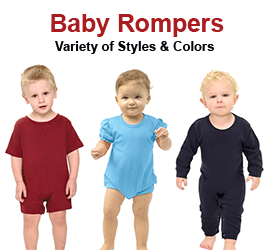
In this guide
Rompers combine a top and bottom in one garment, so the space available for decoration changes with the neckline, leg openings, and closures. Choose the blank around the intended artwork rather than choosing a design size before seeing the garment.
Compare the fabric and construction
Read the product's fiber composition and care instructions. Cotton, polyester, and blends can require different inks, transfers, stabilizers, and heat settings. Fabric weight and stretch also affect the finished feel. Inspect a sample for seams or snaps that could interfere with a print or embroidery hoop.
Choose a suitable decorating method
- Screen printing: useful for repeat designs when the ink system matches the fabric and can be cured correctly.
- Transfers: useful for names and short runs when the transfer supplier approves the fabric.
- Embroidery: suited to small, carefully digitized motifs with backing appropriate for the knit.
Standard sublimation requires a compatible polyester surface; do not assume a cotton romper will accept the same process.
Keep artwork away from closures
Lay a paper proof on the smallest and largest sizes in the order. Leave room around snaps, neck openings, and seams. When heat pressing, isolate the decorating panel so hardware does not prevent even contact. Use equipment accessories only as directed by their manufacturer.
Approve fit and care together
Check the size chart rather than relying only on age labels. After decorating, verify that the romper still opens easily and that the decoration does not restrict stretch across the body. Wash a sample using the permitted garment and decoration care instructions. Record the approved artwork size and placement for each size group before production.


Related Products

