

How to Build a Practical Daycare Spare-Clothes Kit
In this guide
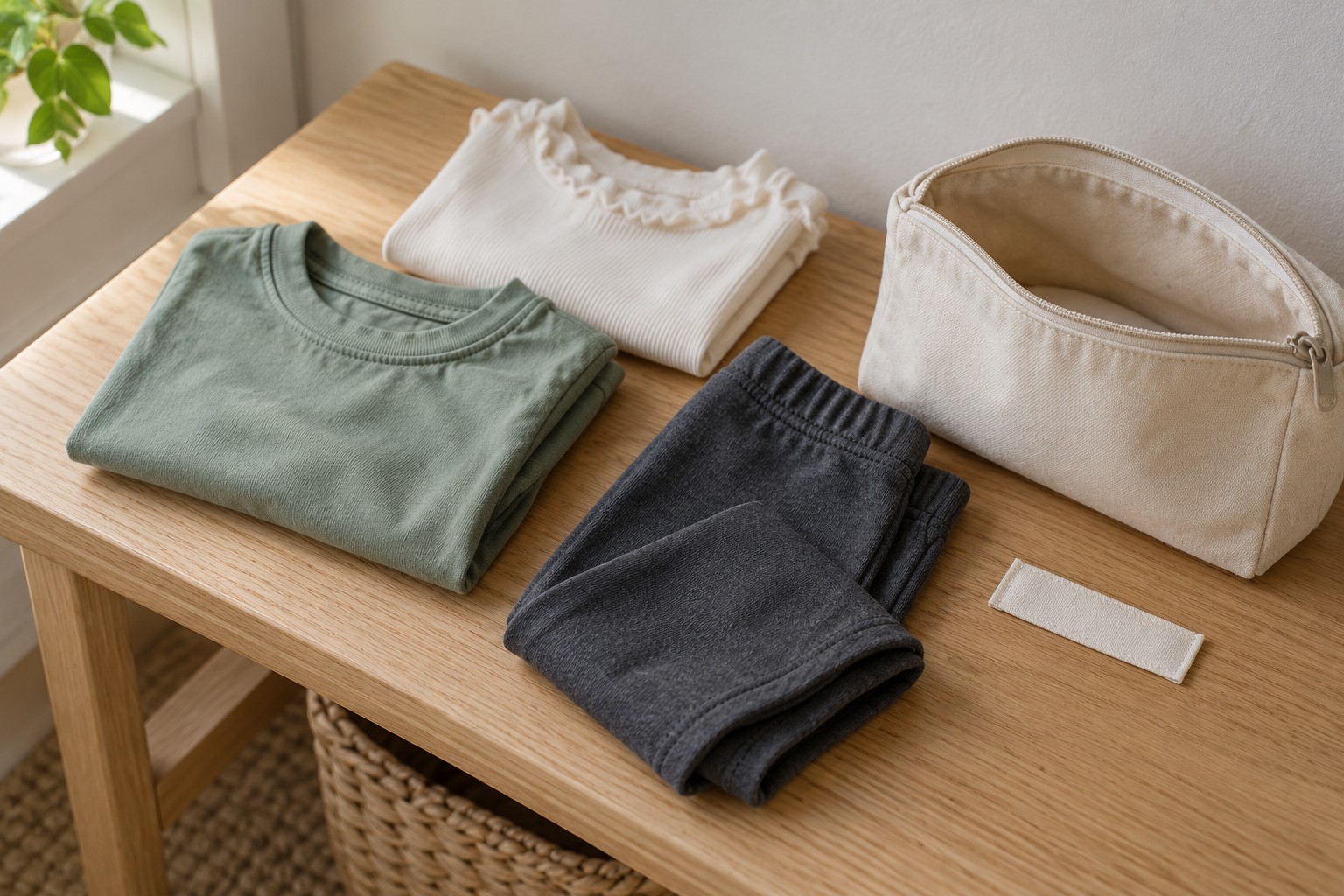
A practical daycare spare-clothes kit contains complete changes that fit now, suit the season, and meet the center's requirements. Choose garments that are straightforward to put on, label them as the center requests, and pack them together. Review the kit regularly for growth, missing pieces, and weather changes rather than leaving the same clothes in a cubby all year.
Start with the center's checklist
Ask what the classroom needs before buying. Requirements can vary with age, toilet-learning routines, outdoor activities, and how frequently families can replace used items. There is no single correct number of spare outfits for every child or center.
Confirm whether the center requests a separate bag for used clothing, a particular labeling method, or additional seasonal items. Keep those requests distinct from your everyday drop-off outfit so a missing spare does not go unnoticed.
Build complete changes, not loose extras
| Part of the kit | Selection check |
|---|---|
| Top | Current fit, easy opening, and suitable sleeve length |
| Bottom | Comfortable movement and manageable waistband or closure |
| Other requested clothing | Appropriate size and a clear place in the kit |
| Storage pouch or bag | Meets classroom requirements and keeps the set together |
Look at toddler apparel or baby garments according to the child's actual needs. A shirt that technically fits but is difficult to change may be less useful as a spare than a simple style with an accessible opening.
Choose clothes for ordinary classroom use
Consider sitting, crawling, reaching, and active play when evaluating fit. Check the garment's construction, seams, and care label. Avoid assuming that an age-based size matches every child, and compare with clothing that fits comfortably now.
A small coordinated palette can make replacement easier: if several tops work with the same bottoms, a used item does not leave the remaining kit incomplete. Plain garments also make it easier to see whether the center's label is present and readable.
Label for reliable returns
Use the center's approved identifier and placement. Follow the label supplier's application directions and check that the label remains secure after laundering. Keep identifying information where staff can find it without adding unnecessary personal details to the outside of the garment.
If you personalize the clothing itself, distinguish that decoration from the center's identification requirements. A decorative initial on the front may not be enough for staff to return a shirt to the correct cubby.
Create a restocking habit
- When a used item comes home, note which piece left the spare kit.
- Replace it with a clean, suitable item before the next required day.
- Check the full set periodically and whenever the child's size changes.
- Review sleeve length, layers, and other center-requested items when the weather changes.
- Retire outgrown pieces from the kit rather than relying on them as emergency backups.
For decorated items, our washing guide explains how to reconcile garment and decoration instructions.
For centers purchasing shared spare clothing
Track stock by garment type and size rather than total piece count alone. Ten tops do not solve a shortage of bottoms in the needed size. Use the center's laundering and lending procedures, record what needs replacing, and keep clean stock organized for staff. The blank apparel inventory guide offers a simple stock-tracking structure that can be adapted to this purpose.
Frequently asked questions
Should spare clothes be one size larger?
Choose clothes that fit and function now. Buying larger does not guarantee better movement or easier changes. Recheck the kit as the child grows.
Are personalized garments necessary?
No. Clear identification according to the center's policy matters more than decoration. Plain garments can be useful and straightforward to replace.
Can the same kit stay at daycare all year?
It can remain there if the center allows it, but its contents still need checking for fit, completeness, and seasonal suitability.

